
Situation
Strategy engagements often begin with the same necessary intake: what systems exist, who owns them, which reports are trusted, where definitions break, what documents already exist, and which business decisions the data estate is supposed to support.
That first touch is valuable, but it can consume meetings before the real strategy work starts. The team needed a guided intake experience that could ask the baseline questions, analyze first-hand documents, and assemble a clear starting picture of the organization's data landscape.
What changed
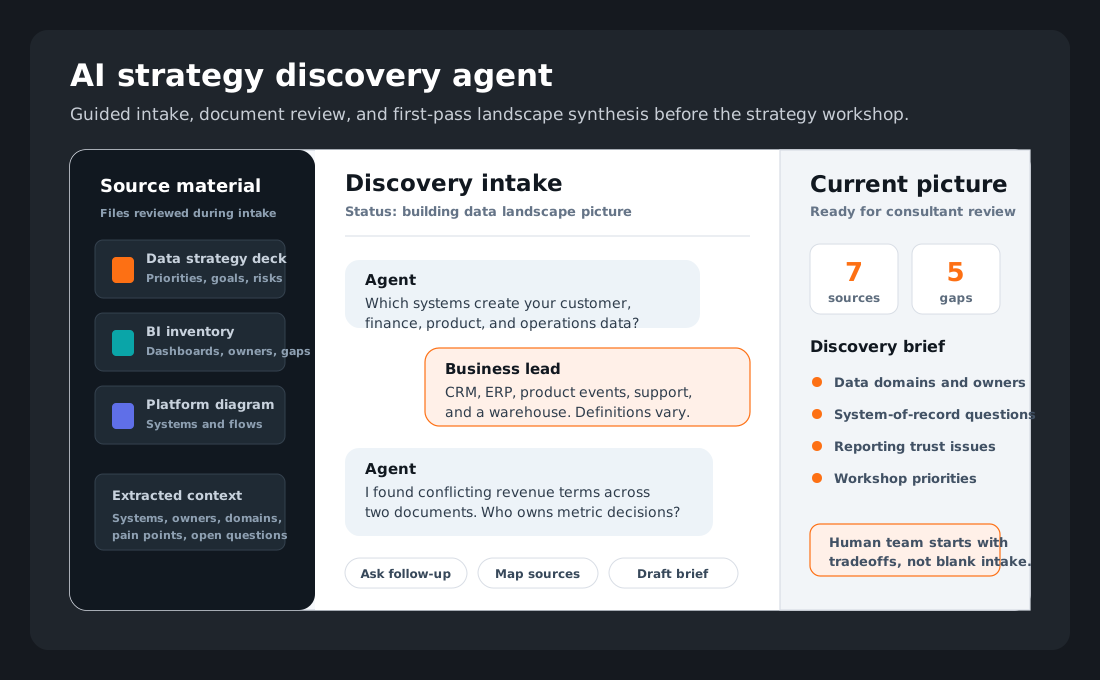
The work became a bounded AI agent for strategy discovery. The agent guides stakeholders through structured questions, adapts its follow-ups based on the answers, and uses uploaded documents to build a first-pass view of the current data environment.
- Designed a guided question flow covering business priorities, source systems, data ownership, reporting pain points, platform constraints, governance, and analytics or AI ambitions.
- Enabled the agent to consume first-hand material such as strategy decks, BI inventories, architecture diagrams, data dictionaries, and operating notes.
- Extracted useful context from those materials: systems, domains, owners, recurring reports, data quality concerns, definition conflicts, and open questions.
- Used follow-up questions to close gaps until the agent had enough clarity to describe the landscape and the remaining unknowns.
- Generated a discovery brief that consultants could review before the live session, shifting meeting time from basic fact gathering to tradeoffs and priorities.
What held up afterward
The useful outcome was not a generic chatbot. It was a repeatable intake workflow that reduced the manual effort required to understand a client's data estate before strategy work began.
Because the agent could read documents and ask targeted follow-ups, consultants received a clearer summary of the landscape, the likely trouble spots, the missing evidence, and the questions worth spending live time on. That created savings in the earliest phase of the engagement without pretending the strategic judgment could be automated away.
Agentic AI works best when the job is bounded. A discovery agent can ask, read, summarize, and prepare, while experienced consultants still own the judgment, prioritization, and recommendations.