
Situation
The team knew the activation journey had friction, but aggregate conversion reporting did not explain where to focus. Registration, identity verification, and first transaction were all visible, yet the drop-offs were being discussed as one broad conversion problem.
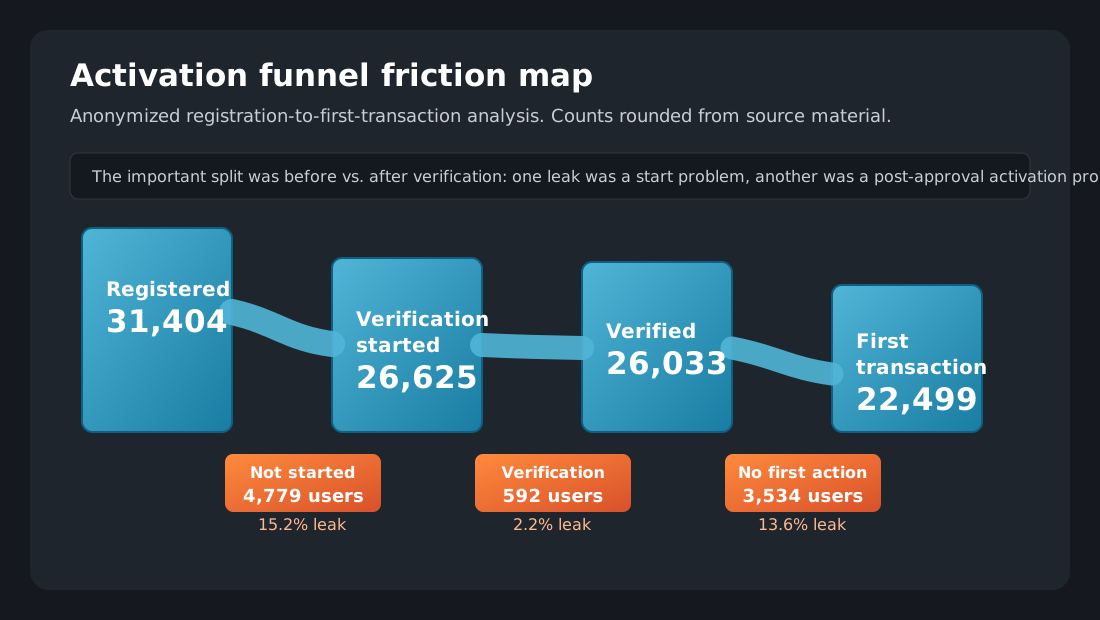
That made it easy to propose generic campaigns and harder to prioritize product fixes or acquisition spend. Leaders needed a clearer view of whether the leak was before verification, during verification, or after approval when users still had not taken the next action.
What changed
The work separated the funnel into operational stages and then quantified the leak at each point. From there, the analysis tested friction signals that could explain where the highest-value fixes and acquisition adjustments might be.
- Mapped the main activation path from registration to identity verification and first transaction.
- Separated drop-offs into users who never started verification, users who hit verification friction, and verified users who did not take the next action.
- Compared friction drivers across device, time of day, day of month, age band, and market attributes instead of relying on broad averages.
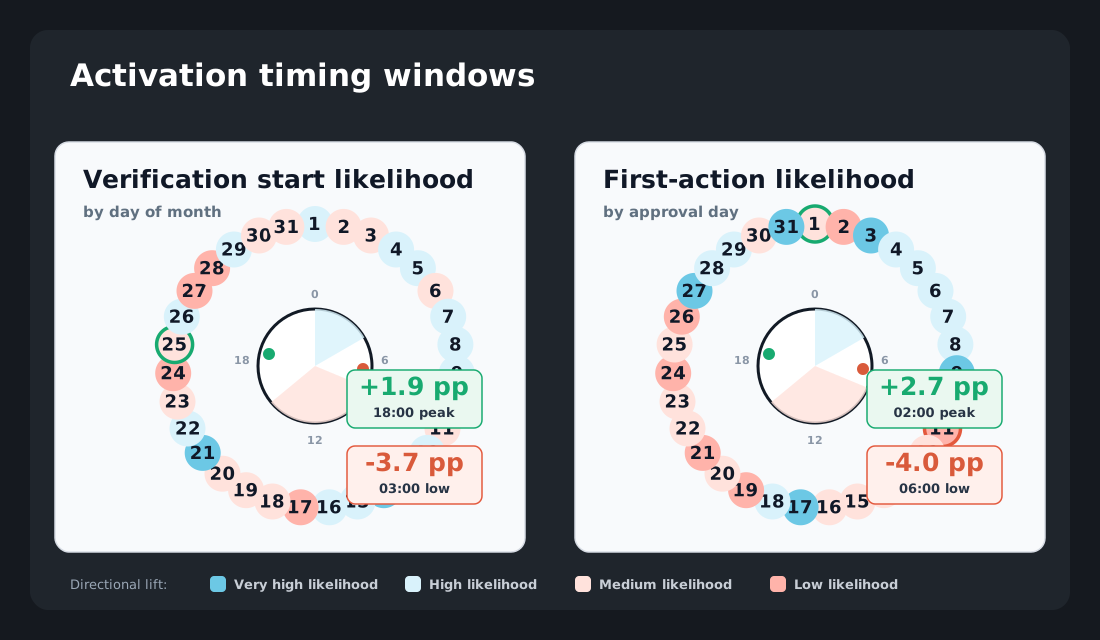
- Identified stronger windows for activation nudges after verification, including day-of-month and hour-of-day patterns worth operational testing.
- Found that device friction mattered before verification, while market-level differences were a stronger signal after approval and age bands provided a smaller supporting signal.
- Translated the findings into acquisition guidance, including the possibility of rewarding affiliate traffic that better matched high-propensity markets and demographic bands.
What held up afterward
The output gave the team a more practical way to prioritize conversion work. The first leak pointed to pre-verification experience and device-specific usability. The second major leak pointed to timed post-approval nudges, localized messaging, and follow-up journeys.
It also connected funnel analytics to acquisition economics. If certain markets, age bands, and activation windows were more likely to convert, affiliate incentives could be tuned toward better-fit traffic rather than raw registration volume.
Equally important, the analysis helped separate useful patterns from noise. Region and market differences had enough variance to guide action, age was a secondary targeting signal, and weekday versus weekend patterns did not justify over-optimization.
Funnel analytics becomes useful when it separates where users drop, why they might drop, when they are most likely to act, and which traffic sources deserve different treatment.